Buy unblockedgames.eu ?
We are moving the project
unblockedgames.eu .
Are you interested in purchasing the domain
unblockedgames.eu ?
domain@kv-gmbh.de · 0541-91531010
Buy unblockedgames.eu ?
What is a free variable in mathematics?
In mathematics, a free variable is a variable that is not bound by any specific value or constraint within a given equation or expression. It is a variable that can take on any value within a certain range or domain. Free variables are often used in the context of solving equations or systems of equations, where they represent the unknown quantities that need to be determined. In linear algebra, free variables are commonly encountered when solving systems of linear equations using techniques such as Gaussian elimination or matrix operations. **
What is a variable and non-variable quantity?
A variable quantity is a quantity that can change or vary, such as the temperature, time, or the price of a product. These quantities can take on different values and are often represented by symbols or letters in mathematical equations. On the other hand, a non-variable quantity is a quantity that remains constant and does not change, such as the speed of light or the number of sides in a triangle. Non-variable quantities are fixed and do not depend on any other factors. **

Similar search terms for Variable
Top-Angebote
Products related to Variable:
-
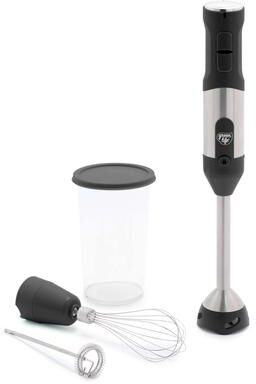
GreenLife Electric Variable Speed Hand BlenderGet three different appliances all in one with this handy stick blender. Designed to save drawer and counter-space, this hard-working hand blender comes with three removable attachments so you can blend, froth, and whisk faster and easier!47,49 $*Shipping: 0,00 $Secure redirect to the provider

-
What is the difference between variable definition and variable initialization?
Variable definition is the process of declaring a variable and specifying its data type, such as int, float, or string. This tells the compiler or interpreter that a variable with a certain name and data type will be used in the program. Variable initialization, on the other hand, is the process of assigning a value to the variable for the first time. This can happen at the same time as the variable is defined, or at a later point in the program. Initialization gives the variable a specific value to work with, while definition simply sets up the variable's characteristics. **
-
How can you publish a variable online using Python?
To publish a variable online using Python, you can use a web framework like Flask or Django to create a web application. Within your web application code, you can define a route that will display the value of the variable when accessed. You can then deploy your web application to a server or a cloud platform to make it accessible online. Users can then access the URL of your web application to view the value of the variable. **
-
How can you publish a variable online with Python?
To publish a variable online with Python, you can use web frameworks like Flask or Django to create a web application. Within your application, you can define routes that render templates containing your variable data. By running your web application on a server, you can make your variable accessible online. Additionally, you can use APIs to send your variable data to a cloud service or database and retrieve it through HTTP requests. **
-
How can one express a variable in terms of another variable?
One can express a variable in terms of another variable by manipulating equations or formulas to isolate the desired variable on one side of the equation. This can involve performing algebraic operations such as addition, subtraction, multiplication, or division to rearrange the equation. By doing so, the variable of interest can be written in terms of the other variable, allowing for a clearer understanding of the relationship between the two variables. **
How can I store a JavaScript variable in a PHP variable?
To store a JavaScript variable in a PHP variable, you can use AJAX to send the JavaScript variable to a PHP script on the server. The PHP script can then receive the variable using $_POST or $_GET superglobals and store it in a PHP variable. This way, you can pass data between JavaScript and PHP seamlessly. **
'How do I write a variable in a variable in Arduino?'
In Arduino, you can write a variable in a variable by using the concept of pointers. You can declare a pointer variable and then assign the address of the original variable to the pointer variable. This allows you to indirectly access the original variable through the pointer variable. Here's an example of how to write a variable in a variable in Arduino: ```C int originalVariable = 10; int *pointerVariable = &originalVariable; // Assign the address of originalVariable to pointerVariable *pointerVariable = 20; // Write a new value to originalVariable through pointerVariable ``` In this example, the value of originalVariable is changed to 20 by writing to it through the pointerVariable. **
Top-Angebote
Products related to Variable:
-
Smeg Variable Temperature Kettle KLF0450's Retro Style Aesthetic Variable 3D Logo Temperature Kettle with Stainless steel body material powder coated. Features include Electronic temperature control, 7 temperature levels and Keep Warm function.259,95 $*Shipping: 0,00 $Secure redirect to the provider
-
GreenLife Electric Variable Speed Hand BlenderGet three different appliances all in one with this handy stick blender. Designed to save drawer and counter-space, this hard-working hand blender comes with three removable attachments so you can blend, froth, and whisk faster and easier!47,99 $*Shipping: 0,00 $Secure redirect to the provider
-
GreenLife Electric Variable Speed Hand BlenderGet three different appliances all in one with this handy stick blender. Designed to save drawer and counter-space, this hard-working hand blender comes with three removable attachments so you can blend, froth, and whisk faster and easier!47,49 $*Shipping: 0,00 $Secure redirect to the provider
-
What is a free variable in mathematics?
In mathematics, a free variable is a variable that is not bound by any specific value or constraint within a given equation or expression. It is a variable that can take on any value within a certain range or domain. Free variables are often used in the context of solving equations or systems of equations, where they represent the unknown quantities that need to be determined. In linear algebra, free variables are commonly encountered when solving systems of linear equations using techniques such as Gaussian elimination or matrix operations. **
-
What is a variable and non-variable quantity?
A variable quantity is a quantity that can change or vary, such as the temperature, time, or the price of a product. These quantities can take on different values and are often represented by symbols or letters in mathematical equations. On the other hand, a non-variable quantity is a quantity that remains constant and does not change, such as the speed of light or the number of sides in a triangle. Non-variable quantities are fixed and do not depend on any other factors. **
-
What is the difference between variable definition and variable initialization?
Variable definition is the process of declaring a variable and specifying its data type, such as int, float, or string. This tells the compiler or interpreter that a variable with a certain name and data type will be used in the program. Variable initialization, on the other hand, is the process of assigning a value to the variable for the first time. This can happen at the same time as the variable is defined, or at a later point in the program. Initialization gives the variable a specific value to work with, while definition simply sets up the variable's characteristics. **
-
How can you publish a variable online using Python?
To publish a variable online using Python, you can use a web framework like Flask or Django to create a web application. Within your web application code, you can define a route that will display the value of the variable when accessed. You can then deploy your web application to a server or a cloud platform to make it accessible online. Users can then access the URL of your web application to view the value of the variable. **
Similar search terms for Variable
-
How can you publish a variable online with Python?
To publish a variable online with Python, you can use web frameworks like Flask or Django to create a web application. Within your application, you can define routes that render templates containing your variable data. By running your web application on a server, you can make your variable accessible online. Additionally, you can use APIs to send your variable data to a cloud service or database and retrieve it through HTTP requests. **
-
How can one express a variable in terms of another variable?
One can express a variable in terms of another variable by manipulating equations or formulas to isolate the desired variable on one side of the equation. This can involve performing algebraic operations such as addition, subtraction, multiplication, or division to rearrange the equation. By doing so, the variable of interest can be written in terms of the other variable, allowing for a clearer understanding of the relationship between the two variables. **
-
How can I store a JavaScript variable in a PHP variable?
To store a JavaScript variable in a PHP variable, you can use AJAX to send the JavaScript variable to a PHP script on the server. The PHP script can then receive the variable using $_POST or $_GET superglobals and store it in a PHP variable. This way, you can pass data between JavaScript and PHP seamlessly. **
-
'How do I write a variable in a variable in Arduino?'
In Arduino, you can write a variable in a variable by using the concept of pointers. You can declare a pointer variable and then assign the address of the original variable to the pointer variable. This allows you to indirectly access the original variable through the pointer variable. Here's an example of how to write a variable in a variable in Arduino: ```C int originalVariable = 10; int *pointerVariable = &originalVariable; // Assign the address of originalVariable to pointerVariable *pointerVariable = 20; // Write a new value to originalVariable through pointerVariable ``` In this example, the value of originalVariable is changed to 20 by writing to it through the pointerVariable. **
* All prices are inclusive of VAT and, if applicable, plus shipping costs. The offer information is based on the details provided by the respective shop and is updated through automated processes. Real-time updates do not occur, so deviations can occur in individual cases. ** Note: Parts of this content were created by AI.