Buy unblockedgames.eu ?
We are moving the project
unblockedgames.eu .
Are you interested in purchasing the domain
unblockedgames.eu ?
domain@kv-gmbh.de · 0541-91531010
Buy unblockedgames.eu ?
What is the difference between an embedded interrogative clause, an indirect question clause, and a free relative clause?
An embedded interrogative clause is a question that is embedded within a larger sentence, such as "I wonder where he went." An indirect question clause is a sentence that reports a question without using question marks, like "She asked if he was coming." A free relative clause is a clause that functions as a noun and is introduced by a wh-word, such as "I'll take whatever you give me." The key difference is that embedded interrogative clauses and indirect question clauses involve asking a question, while free relative clauses act as a noun phrase. **
How do you transform an object clause or a subject clause into a dependent clause (subordinate clause)?
To transform an object clause or a subject clause into a dependent clause, you can add a subordinating conjunction at the beginning of the clause. For example, changing "I know that he is coming" (object clause) to "I know when he is coming" (dependent clause). Another way is to remove the subject or object pronoun and change the verb form to make it dependent on the main clause. For instance, changing "She believes she can win" (subject clause) to "She believes she can win" (dependent clause). **


Similar search terms for Clause
Top-Angebote
Products related to Clause:
-
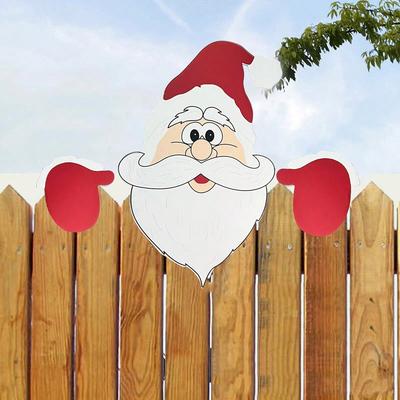
Daily Deals Depot Santa Clause Peeker Yard Ornament, Christmas Fence Decoration, Indoor Outdoor Holiday Placard, DIY Festival Gift greenBring the festive spirit to life with this Christmas Fence Ornament Santa Clause Peeker Yard Decoration, the perfect way to surprise neighbors and delight guests this holiday season. Designed for indoor and outdoor use, this charming Santa Clause...21,97 $*Shipping: 0,00 $Secure redirect to the provider
-
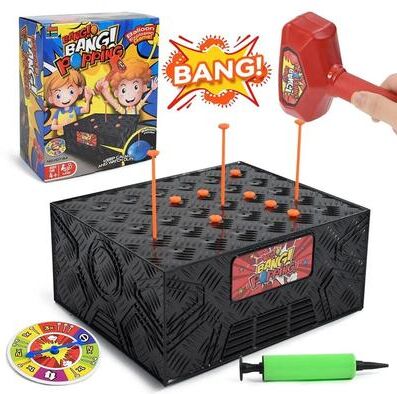
Uplift Picks Multiplayer Balloon Explosion Game Fun Family Tabletop Party Toy Multiplayer Balloon Explosion Game Fun Family Tabletop Party ToyGet ready for laughter, suspense, and surprise with this exciting balloon explosion game that keeps everyone on edge. Designed as a thrilling family tabletop party game, players take turns adding pressure until the balloon suddenly pops. This...30,98 $*Shipping: 0,00 $Secure redirect to the provider
-
Inspire Daily Merch Balloon Explosion Game Fun Party Tabletop Toy Multiplayer For Family Gatherings And Adventure Balloon Explosion Game Fun Party Tabletop Toy Multiplayer For Family Gatherings And AdventureUnleash the Fun with the Multiplayer Balloon Explosion Game The Multiplayer Balloon Explosion Game is the ultimate tabletop toy for unforgettable moments. Designed to get everyone involved, this game is perfect for both kids and adults, offering...79,97 $*Shipping: 0,00 $Secure redirect to the provider
-
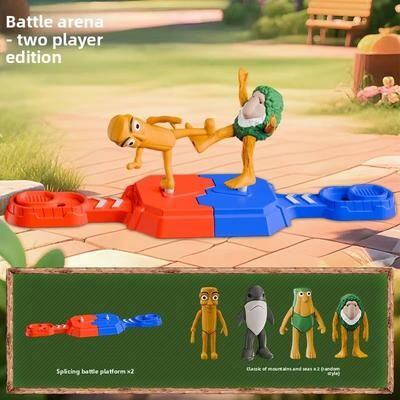
Inspired Finds Shanhaijing Wooden Stick Multiplayer Battle Toy For Family Fun & Party Games 2 person VersionTurn ordinary gatherings into lively interaction with this wooden battle toy inspired by the Shanhaijing spirit of creative play. Designed for multiplayer battle games, it invites parents, kids, and friends to compete in friendly challenges that...34,99 $*Shipping: 0,00 $Secure redirect to the provider


-
Is an infinitive clause a subordinate clause?
Yes, an infinitive clause is a type of subordinate clause. It functions as a single unit within a sentence and is dependent on the main clause for its meaning. Infinitive clauses typically begin with the word "to" followed by a verb, and they can serve various purposes such as expressing purpose, result, or obligation. **
-
What are main clause-subordinate clause constructions?
Main clause-subordinate clause constructions are sentences that consist of a main clause and one or more subordinate clauses. The main clause is a complete sentence that can stand alone, while the subordinate clause depends on the main clause for its meaning and cannot stand alone. Subordinate clauses often begin with subordinating conjunctions such as "because," "although," "if," or "when," and they provide additional information or context to the main clause. These constructions allow for more complex and nuanced sentence structures, and they are commonly used in both spoken and written language. **
-
Can an adverbial clause also be a subject clause or an object clause?
No, an adverbial clause cannot be a subject clause or an object clause. An adverbial clause functions as an adverb to modify a verb, adjective, or adverb in a sentence. Subject clauses and object clauses, on the other hand, serve as the subject or object of the main clause, respectively. Each type of clause has a specific grammatical function within a sentence. **
-
Is the main clause and subordinate clause correct?
To determine if the main clause and subordinate clause are correct, you need to ensure that they are grammatically sound and that they make sense when combined. The main clause should be able to stand alone as a complete sentence, while the subordinate clause provides additional information but cannot stand alone. Checking for subject-verb agreement and proper punctuation between the two clauses can help confirm their correctness. **

How do I recognize a relative clause, a conjunctional clause, and an interrogative clause?
A relative clause typically starts with a relative pronoun (such as who, whom, whose, which, or that) and provides more information about a noun in the main clause. A conjunctional clause, on the other hand, is introduced by a conjunction (such as and, but, or because) and connects two independent clauses. An interrogative clause is a type of clause that asks a question and is typically introduced by an interrogative pronoun (such as who, what, when, where, why, or how) or an interrogative adverb (such as how, when, or where). **
How can I recognize a relative clause, a conjunctional clause, and an interrogative clause?
A relative clause is a type of dependent clause that typically starts with a relative pronoun (such as who, whom, whose, which, or that) and provides additional information about a noun in the main clause. A conjunctional clause, on the other hand, is a dependent clause that functions as an adverb, adjective, or noun in a sentence and is connected to the main clause by a conjunction (such as because, although, if, when, etc.). An interrogative clause is a type of clause that asks a question and typically begins with a question word (such as who, what, where, when, why, or how) or with a helping verb followed by the subject. **
Top-Angebote
Products related to Clause:
-
ModernMart Christmas Fence Decoration: Santa, Snowman, Reindeer, Penguin Peeker Ornaments For Indoor Outdoor Festivities Color: Santa ClauseChristmas Fence Decoration Santa Clause Snowman Reindeer Penguin Peeker Yard Ornaments Indoor Outdoor Festival Gift Christmas Fence Decoration Santa Clause Snowman Reindeer Penguin Peeker Brand new & high quality Material: PP plastic Color:...20,00 $*Shipping: 0,00 $Secure redirect to the provider
-
Combo Retail Shop Christmas Fence Ornaments, Santa Clause Peeker, Yard Ornaments, Indoor Outdoor, DIY Festival Gift greenBring the magic of the holidays to your home with these charming Christmas Fence Ornaments. Featuring a playful Santa Clause Peeker, these yard decorations are perfect for both indoor and outdoor spaces. Crafted to brighten your garden, lawn, or...44,97 $*Shipping: 0,00 $Secure redirect to the provider
-
Daily Deals Depot Santa Clause Peeker Yard Ornament, Christmas Fence Decoration, Indoor Outdoor Holiday Placard, DIY Festival Gift greenBring the festive spirit to life with this Christmas Fence Ornament Santa Clause Peeker Yard Decoration, the perfect way to surprise neighbors and delight guests this holiday season. Designed for indoor and outdoor use, this charming Santa Clause...21,97 $*Shipping: 0,00 $Secure redirect to the provider
-
Uplift Picks Multiplayer Balloon Explosion Game Fun Family Tabletop Party Toy Multiplayer Balloon Explosion Game Fun Family Tabletop Party ToyGet ready for laughter, suspense, and surprise with this exciting balloon explosion game that keeps everyone on edge. Designed as a thrilling family tabletop party game, players take turns adding pressure until the balloon suddenly pops. This...30,98 $*Shipping: 0,00 $Secure redirect to the provider
-
What is the difference between an embedded interrogative clause, an indirect question clause, and a free relative clause?
An embedded interrogative clause is a question that is embedded within a larger sentence, such as "I wonder where he went." An indirect question clause is a sentence that reports a question without using question marks, like "She asked if he was coming." A free relative clause is a clause that functions as a noun and is introduced by a wh-word, such as "I'll take whatever you give me." The key difference is that embedded interrogative clauses and indirect question clauses involve asking a question, while free relative clauses act as a noun phrase. **
-
How do you transform an object clause or a subject clause into a dependent clause (subordinate clause)?
To transform an object clause or a subject clause into a dependent clause, you can add a subordinating conjunction at the beginning of the clause. For example, changing "I know that he is coming" (object clause) to "I know when he is coming" (dependent clause). Another way is to remove the subject or object pronoun and change the verb form to make it dependent on the main clause. For instance, changing "She believes she can win" (subject clause) to "She believes she can win" (dependent clause). **
-
Is an infinitive clause a subordinate clause?
Yes, an infinitive clause is a type of subordinate clause. It functions as a single unit within a sentence and is dependent on the main clause for its meaning. Infinitive clauses typically begin with the word "to" followed by a verb, and they can serve various purposes such as expressing purpose, result, or obligation. **
-
What are main clause-subordinate clause constructions?
Main clause-subordinate clause constructions are sentences that consist of a main clause and one or more subordinate clauses. The main clause is a complete sentence that can stand alone, while the subordinate clause depends on the main clause for its meaning and cannot stand alone. Subordinate clauses often begin with subordinating conjunctions such as "because," "although," "if," or "when," and they provide additional information or context to the main clause. These constructions allow for more complex and nuanced sentence structures, and they are commonly used in both spoken and written language. **
Similar search terms for Clause
-
Inspire Daily Merch Balloon Explosion Game Fun Party Tabletop Toy Multiplayer For Family Gatherings And Adventure Balloon Explosion Game Fun Party Tabletop Toy Multiplayer For Family Gatherings And AdventureUnleash the Fun with the Multiplayer Balloon Explosion Game The Multiplayer Balloon Explosion Game is the ultimate tabletop toy for unforgettable moments. Designed to get everyone involved, this game is perfect for both kids and adults, offering...79,97 $*Shipping: 0,00 $Secure redirect to the provider
-
Inspired Finds Shanhaijing Wooden Stick Multiplayer Battle Toy For Family Fun & Party Games 2 person VersionTurn ordinary gatherings into lively interaction with this wooden battle toy inspired by the Shanhaijing spirit of creative play. Designed for multiplayer battle games, it invites parents, kids, and friends to compete in friendly challenges that...34,99 $*Shipping: 0,00 $Secure redirect to the provider
-
Usborne My First Phonics Reading Library 15 Books Collection Box Set (Phonics Readers) (WITH FREE AUDIO ONLINE)Usborne My First Phonics Reading Library 15 Books Collection Box Set (Phonics Readers) (WITH FREE AUDIO ONLINE) Cow Takes a BowWhen Brown Cow visits the circus, she puts on a surprise performance. She slips, trips, drops things and loses her hat - but the ringmaster is thrilled!Snail Brings the MailHooray for snail! He brings the mail... but he’s ever so slow! A hilarious story fun to share aloud together, or for children to tackle on their own. Reliable snail never fails to deliver the mail, but can he make it on time?Bee Makes TeaBee make a tea for Queen Bee’s birthday.Underpants for AntsThe ants are feeling a bit chilly – can Mouse help with her knitting skills?Croc Gets a ShockCroc is late for everything, even her own birthday party! She sleeps through her alarm, misses the bus, and what's worse, she has the hiccups. A surprise birthday present may be just what she needs...Crow in the SnowCrow picks up sticks, some stones and cones… And look- a crow made out of snow.Spider in a GliderSpider wishes she could fly, so she builds her very own glider. But when danger strikes, can Spider save the day?Seal at the WheelSeal loves her new speed boat, but she keeps going too fast! Can she learn to be more careful?Ape's Great EscapeApe’s in chains for stealing grapes. He has a cunning scheme to escape, but will the prison guards catch him?Chimp with a LimpCheeky Chimp has a limp…or does he? Follow his extremely tall tale as he explains why he cannot possibly help Cheetah.Hyena BallerinaHyena longs to become a ballerina, but will her dreams come true?Giraffe in the BathGiraffe is all set for a soak in the tub after a hard day’s work – but no one will leave her in peace!Goat in a BoatGoat rows his boat around the moat. He sits and gazes at his float. It sinks. He blinks. “A fish!” he thinks.Bug in a RugA funny picture book featuring a madcap story about a bug who just wants to get snug in his rug, which uses phonic repetition to help children learn to read.Kangaroo at the ZooWhat a hullabaloo, someone new at the zoo! How do you do? I’m a kangaroo! Related Tags: Usborne books16,25 £*Shipping: 2,99 £Secure redirect to the provider
-
Combo Retail Shop Christmas Fence Ornaments, Santa Clause Peeker, Yard Ornaments, Indoor Outdoor, DIY Festival Gift redBring the magic of the holidays to your home with these charming Christmas Fence Ornaments. Featuring a playful Santa Clause Peeker, these yard decorations are perfect for both indoor and outdoor spaces. Crafted to brighten your garden, lawn, or...44,97 $*Shipping: 0,00 $Secure redirect to the provider
-
Can an adverbial clause also be a subject clause or an object clause?
No, an adverbial clause cannot be a subject clause or an object clause. An adverbial clause functions as an adverb to modify a verb, adjective, or adverb in a sentence. Subject clauses and object clauses, on the other hand, serve as the subject or object of the main clause, respectively. Each type of clause has a specific grammatical function within a sentence. **
-
Is the main clause and subordinate clause correct?
To determine if the main clause and subordinate clause are correct, you need to ensure that they are grammatically sound and that they make sense when combined. The main clause should be able to stand alone as a complete sentence, while the subordinate clause provides additional information but cannot stand alone. Checking for subject-verb agreement and proper punctuation between the two clauses can help confirm their correctness. **
-
How do I recognize a relative clause, a conjunctional clause, and an interrogative clause?
A relative clause typically starts with a relative pronoun (such as who, whom, whose, which, or that) and provides more information about a noun in the main clause. A conjunctional clause, on the other hand, is introduced by a conjunction (such as and, but, or because) and connects two independent clauses. An interrogative clause is a type of clause that asks a question and is typically introduced by an interrogative pronoun (such as who, what, when, where, why, or how) or an interrogative adverb (such as how, when, or where). **
-
How can I recognize a relative clause, a conjunctional clause, and an interrogative clause?
A relative clause is a type of dependent clause that typically starts with a relative pronoun (such as who, whom, whose, which, or that) and provides additional information about a noun in the main clause. A conjunctional clause, on the other hand, is a dependent clause that functions as an adverb, adjective, or noun in a sentence and is connected to the main clause by a conjunction (such as because, although, if, when, etc.). An interrogative clause is a type of clause that asks a question and typically begins with a question word (such as who, what, where, when, why, or how) or with a helping verb followed by the subject. **
* All prices are inclusive of VAT and, if applicable, plus shipping costs. The offer information is based on the details provided by the respective shop and is updated through automated processes. Real-time updates do not occur, so deviations can occur in individual cases. ** Note: Parts of this content were created by AI.