Buy unblockedgames.eu ?
We are moving the project
unblockedgames.eu .
Are you interested in purchasing the domain
unblockedgames.eu ?
domain@kv-gmbh.de · 0541-91531010
Buy unblockedgames.eu ?
Is linguistic design the same as linguistic devices?
No, linguistic design and linguistic devices are not the same. Linguistic design refers to the overall structure and organization of language, including factors such as syntax, semantics, and discourse patterns. On the other hand, linguistic devices are specific techniques or tools used within language to achieve certain effects, such as metaphors, similes, or alliteration. While linguistic devices are a part of linguistic design, they are just one component of the broader concept. **
What are non-linguistic signs and linguistic signs?
Non-linguistic signs are symbols or signals that convey meaning without the use of language, such as traffic lights, facial expressions, or body language. These signs rely on visual cues or gestures to communicate information. On the other hand, linguistic signs are symbols that represent specific meanings within a particular language system, such as words, letters, or numbers. Linguistic signs rely on the conventions and rules of language to convey meaning. **


Similar search terms for Linguistic
Top-Angebote
Products related to Linguistic:
-
Inspire Daily Merch Balloon Explosion Game Fun Party Tabletop Toy Multiplayer For Family Gatherings And Adventure Balloon Explosion Game Fun Party Tabletop Toy Multiplayer For Family Gatherings And AdventureUnleash the Fun with the Multiplayer Balloon Explosion Game The Multiplayer Balloon Explosion Game is the ultimate tabletop toy for unforgettable moments. Designed to get everyone involved, this game is perfect for both kids and adults, offering...79,97 $*Shipping: 0,00 $Secure redirect to the provider
-
Inspired Finds Shanhaijing Wooden Stick Multiplayer Battle Toy For Family Fun & Party Games 2 person VersionTurn ordinary gatherings into lively interaction with this wooden battle toy inspired by the Shanhaijing spirit of creative play. Designed for multiplayer battle games, it invites parents, kids, and friends to compete in friendly challenges that...34,99 $*Shipping: 0,00 $Secure redirect to the provider
-
The Usborne Reading Collection 50 Books Box Set (with Free Audio Online) - Ages 5+ - Paperback Usborne Publishing LtdTitles in this set: The first 17 books are taken from Usborne First Reading Level 3: 1. The Bug Who Wanted A Hug 2. The King's Pudding 3. The Goose that laid the Golden Eggs 4. Chicken Licken 5. The Musicians of Bremen 6. The Town Mouse and the Country Mouse 7. The Boy Who Cried Wolf 8. The Magic Porridge Pot 9. The Gingerbread Man 10. The Leopard and the Sky God 11. The Lion and the Mouse 12. The Ant and the Grasshopper 13. The Little Red Hen 14. The Fox and the Crow 15. The Fox and the Stork 16. The Dinosaur Who Lost His Roar 17. The Dinosaur Who Stayed Indoors The next 19 books are taken from Usborne First Reading Level 4: 1. The Tin Soldier 2. The Golden Carpet 3. The Reluctant Dragon 4. Baba Yaga the Flying Witch 5. The Owl and the Pussy Cat 6. The Hare and the Tortoise 7. Cinderella 8. Snow White and the Seven Dwarfs 9. Jack & the Beanstalk 10. Goldilocks and the Three Bears 11. Little Red Riding Hood 12. Sleeping Beauty 13. The Elves and the Shoemaker 14. Princess and the Pea 15. Beauty and the Beast 16. The Ugly Duckling 17. The Three Wishes 18. The Story of Pinocchio 19. How Tortoise tricked the Birds 14 Further books are taken from Usborne Young Reading Series 1: 1. The Wise Princess 2. Snow White and Rose Red 3. The Sleeping Prince 4. The Wooden Horse 5. The Little Mermaid 6. The Nutcracker 7. Hansel and Gretel 8. Rumplestilskin 9. Adventures of Sinbad the Sailor 10. The Runaway Princess 11. Tinder Box 12. Icarus, the Boy Who Flew Too High 13. Stories of Unicorns 14. Stories of Merlin Description: Inspire a lifelong love of reading in children with this fantastic library of 50 books. This great value set of fully illustrated story books is sure to suit all levels of reading ability. All fifty titles feature in the Usborne Reading Programme, a range that has been especially developed to help encourage young readers at home.32,99 £*Shipping: 2,99 £Secure redirect to the provider
-
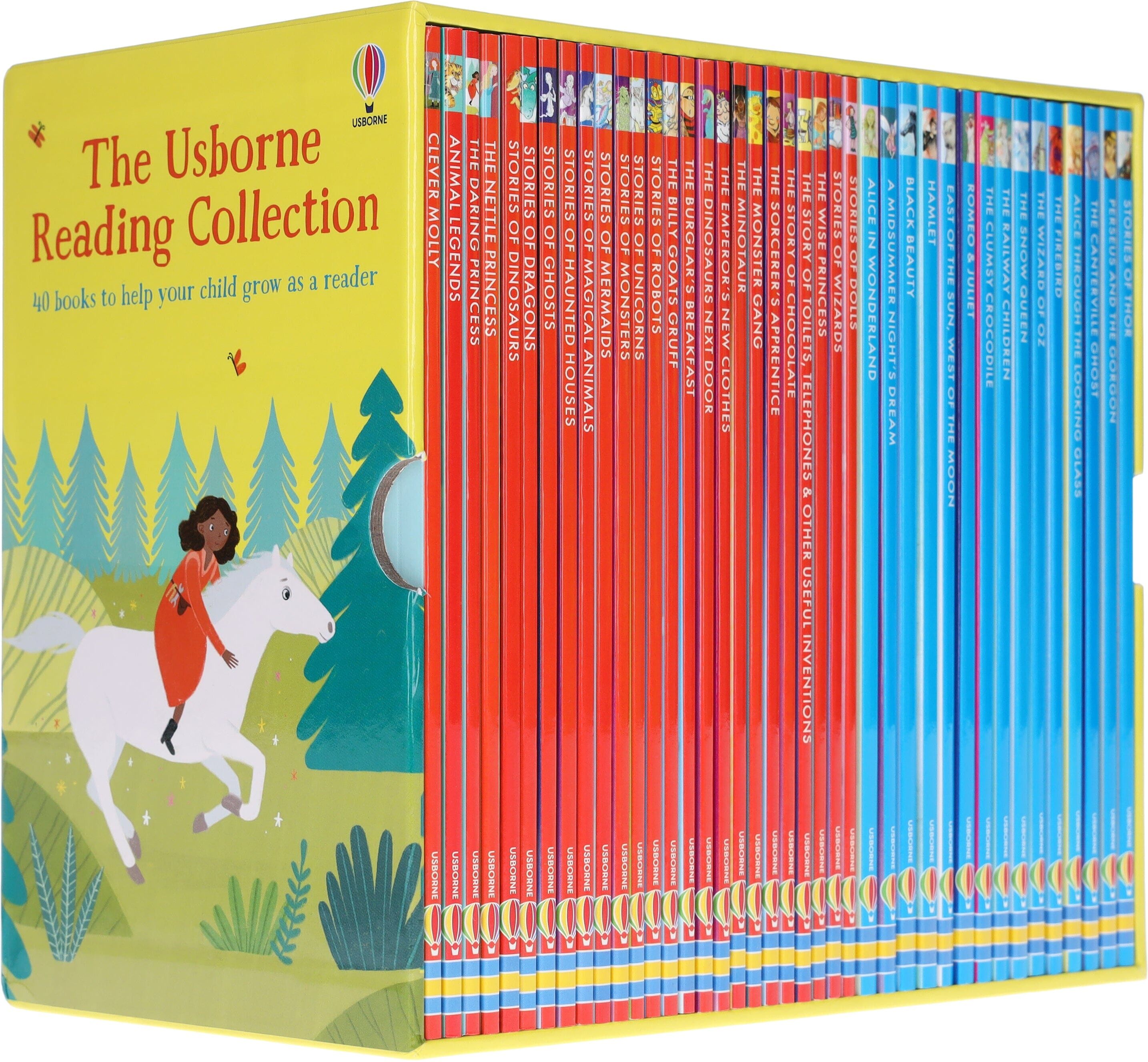
The Usborne Reading 40 Books Collection Box Set (with Free Audio Online) - Ages 5+ - Paperback Usborne Publishing LtdTitles in this set: The first 25 books are taken from Usborne Young Reading Series One: The Wise Princess Clever Molly The Nettle Princess The Daring Princess Animal Legends Stories of Dinosaurs Stories of Dragons Stories of Ghosts Stories of Haunted Houses Stories of Magical Animals Stories of Mermaids Stories of Monsters Stories of Unicorns Stories of Robots The Billy Goats Gruff The Burglar's Breakfast The Dinosaurs Next Door The Emperor's New Clothes The Monster Gang The Sorcerer's Apprentice The Story of Chocolate Story of Toilets, Telephones & other useful inventions Stories of Wizards Stories of Dolls The Minotaur The next 15 books are taken from Usborne Young Reading Series two: Alice in Wonderland A Midsummer Night's Dream Black Beauty Hamlet East of the Sun, West of the Moon Romeo and Juliet The Clumsy Crocodile The Railway Children The Snow Queen The Wizard of Oz The Firebird Alice Through The Looking-Glass The Canterville Ghost Perseus and the Gorgon Young Reading Stories of Thor Description Perfect for building confidence and fostering a love of reading, The Usborne Reading Collection is a fantastic library of 40 books with free Audio Online. From much-loved classics to comical original stories and real-life histories, this fully illustrated set has been developed with reading experts from the University of Roehampton.26,74 £*Shipping: 2,99 £Secure redirect to the provider



-
What are good examples of linguistic and non-linguistic images?
Good examples of linguistic images include descriptive language that paints a vivid picture in the reader's mind, such as "the sun hung low in the sky, casting a warm golden glow over the fields." Non-linguistic images can include photographs, paintings, or other visual art that convey a specific mood or message without the use of words. For example, a photograph of a stormy sea with dark, churning waves can evoke a sense of danger and power without any accompanying text. Both linguistic and non-linguistic images can be powerful tools for communication and expression. **
-
What are linguistic peculiarities?
Linguistic peculiarities refer to unique or unusual features found in a language that set it apart from others. These can include specific grammar rules, pronunciation patterns, vocabulary choices, or cultural influences that shape the way a language is spoken or written. Linguistic peculiarities can vary widely from one language to another, making each language distinct and interesting in its own way. **
-
What are linguistic aspects?
Linguistic aspects refer to the different components of language that are studied in linguistics. These aspects include phonetics (the study of speech sounds), phonology (the study of sound patterns), morphology (the study of word structure), syntax (the study of sentence structure), semantics (the study of meaning), and pragmatics (the study of language use in context). Understanding these linguistic aspects helps us analyze and interpret language in a systematic way. **
-
What is linguistic redundancy?
Linguistic redundancy refers to the use of unnecessary or repetitive words, phrases, or information in communication. It can often be seen as a form of over-explaining or providing more information than is needed to convey a message. While some level of redundancy can help clarify communication and ensure understanding, excessive redundancy can lead to inefficiency and confusion in language. Overall, linguistic redundancy can be both a helpful tool for emphasizing key points and a hindrance to clear and concise communication. **
What are linguistic features?
Linguistic features are the characteristics of language that help to distinguish one language from another or one dialect from another. These features can include phonological features (such as the sounds used in a language), morphological features (such as word formation and inflection), syntactic features (such as word order and sentence structure), and semantic features (such as the meaning of words and how they are used in context). Linguistic features are essential for understanding and analyzing language and are used by linguists to study and compare different languages and dialects. **
What are linguistic devices?
Linguistic devices are techniques and structures used in language to convey meaning, create emphasis, and evoke certain emotions or responses from the audience. These devices can include figurative language such as metaphors and similes, as well as rhetorical devices like repetition and parallelism. They are used by writers and speakers to enhance the impact and effectiveness of their communication, and can be found in various forms of literature, poetry, speeches, and everyday conversation. **
Top-Angebote
Products related to Linguistic:
-
Zaffre Guilty by Definition: The instant Sunday Times bestselling linguistic mystery from Britain's wordsmith, Susie Dent (Clarendon Lexicographers)A coded letter. A missing woman. A truth waiting to be found. When an anonymous letter is delivered to the Clarendon English Dictionary office, it becomes rapidly clear that this is not the usual word-related enquiry. Instead, the letter hints at sinister events linked to a particular year. For editor Martha Thornhill, the date can mean only one thing: the summer her brilliant older sister Charlie went missing. Ten years on, Martha and her family are no closer to unravelling the mystery of Charlie's disappearance - until now. As more letters arrive, Martha and her team follow the linguistic clues to a troubling truth. It seems Charlie was keeping a powerful secret, and that someone is desperate to keep it well and truly buried. Guilty by Definition is a love letter not only to language but to the city of Oxford, wrapped within an intriguing mystery of a missing woman and considering the emotional aftershocks of her disappearance on those left behind.5,99 £*Shipping: 2,99 £Secure redirect to the provider
-
Uplift Picks Multiplayer Balloon Explosion Game Fun Family Tabletop Party Toy Multiplayer Balloon Explosion Game Fun Family Tabletop Party ToyGet ready for laughter, suspense, and surprise with this exciting balloon explosion game that keeps everyone on edge. Designed as a thrilling family tabletop party game, players take turns adding pressure until the balloon suddenly pops. This...30,98 $*Shipping: 0,00 $Secure redirect to the provider
-
Inspire Daily Merch Balloon Explosion Game Fun Party Tabletop Toy Multiplayer For Family Gatherings And Adventure Balloon Explosion Game Fun Party Tabletop Toy Multiplayer For Family Gatherings And AdventureUnleash the Fun with the Multiplayer Balloon Explosion Game The Multiplayer Balloon Explosion Game is the ultimate tabletop toy for unforgettable moments. Designed to get everyone involved, this game is perfect for both kids and adults, offering...79,97 $*Shipping: 0,00 $Secure redirect to the provider
-
Inspired Finds Shanhaijing Wooden Stick Multiplayer Battle Toy For Family Fun & Party Games 2 person VersionTurn ordinary gatherings into lively interaction with this wooden battle toy inspired by the Shanhaijing spirit of creative play. Designed for multiplayer battle games, it invites parents, kids, and friends to compete in friendly challenges that...34,99 $*Shipping: 0,00 $Secure redirect to the provider
-
Is linguistic design the same as linguistic devices?
No, linguistic design and linguistic devices are not the same. Linguistic design refers to the overall structure and organization of language, including factors such as syntax, semantics, and discourse patterns. On the other hand, linguistic devices are specific techniques or tools used within language to achieve certain effects, such as metaphors, similes, or alliteration. While linguistic devices are a part of linguistic design, they are just one component of the broader concept. **
-
What are non-linguistic signs and linguistic signs?
Non-linguistic signs are symbols or signals that convey meaning without the use of language, such as traffic lights, facial expressions, or body language. These signs rely on visual cues or gestures to communicate information. On the other hand, linguistic signs are symbols that represent specific meanings within a particular language system, such as words, letters, or numbers. Linguistic signs rely on the conventions and rules of language to convey meaning. **
-
What are good examples of linguistic and non-linguistic images?
Good examples of linguistic images include descriptive language that paints a vivid picture in the reader's mind, such as "the sun hung low in the sky, casting a warm golden glow over the fields." Non-linguistic images can include photographs, paintings, or other visual art that convey a specific mood or message without the use of words. For example, a photograph of a stormy sea with dark, churning waves can evoke a sense of danger and power without any accompanying text. Both linguistic and non-linguistic images can be powerful tools for communication and expression. **
-
What are linguistic peculiarities?
Linguistic peculiarities refer to unique or unusual features found in a language that set it apart from others. These can include specific grammar rules, pronunciation patterns, vocabulary choices, or cultural influences that shape the way a language is spoken or written. Linguistic peculiarities can vary widely from one language to another, making each language distinct and interesting in its own way. **
Similar search terms for Linguistic
-
The Usborne Reading Collection 50 Books Box Set (with Free Audio Online) - Ages 5+ - Paperback Usborne Publishing LtdTitles in this set: The first 17 books are taken from Usborne First Reading Level 3: 1. The Bug Who Wanted A Hug 2. The King's Pudding 3. The Goose that laid the Golden Eggs 4. Chicken Licken 5. The Musicians of Bremen 6. The Town Mouse and the Country Mouse 7. The Boy Who Cried Wolf 8. The Magic Porridge Pot 9. The Gingerbread Man 10. The Leopard and the Sky God 11. The Lion and the Mouse 12. The Ant and the Grasshopper 13. The Little Red Hen 14. The Fox and the Crow 15. The Fox and the Stork 16. The Dinosaur Who Lost His Roar 17. The Dinosaur Who Stayed Indoors The next 19 books are taken from Usborne First Reading Level 4: 1. The Tin Soldier 2. The Golden Carpet 3. The Reluctant Dragon 4. Baba Yaga the Flying Witch 5. The Owl and the Pussy Cat 6. The Hare and the Tortoise 7. Cinderella 8. Snow White and the Seven Dwarfs 9. Jack & the Beanstalk 10. Goldilocks and the Three Bears 11. Little Red Riding Hood 12. Sleeping Beauty 13. The Elves and the Shoemaker 14. Princess and the Pea 15. Beauty and the Beast 16. The Ugly Duckling 17. The Three Wishes 18. The Story of Pinocchio 19. How Tortoise tricked the Birds 14 Further books are taken from Usborne Young Reading Series 1: 1. The Wise Princess 2. Snow White and Rose Red 3. The Sleeping Prince 4. The Wooden Horse 5. The Little Mermaid 6. The Nutcracker 7. Hansel and Gretel 8. Rumplestilskin 9. Adventures of Sinbad the Sailor 10. The Runaway Princess 11. Tinder Box 12. Icarus, the Boy Who Flew Too High 13. Stories of Unicorns 14. Stories of Merlin Description: Inspire a lifelong love of reading in children with this fantastic library of 50 books. This great value set of fully illustrated story books is sure to suit all levels of reading ability. All fifty titles feature in the Usborne Reading Programme, a range that has been especially developed to help encourage young readers at home.32,99 £*Shipping: 2,99 £Secure redirect to the provider
-
The Usborne Reading 40 Books Collection Box Set (with Free Audio Online) - Ages 5+ - Paperback Usborne Publishing LtdTitles in this set: The first 25 books are taken from Usborne Young Reading Series One: The Wise Princess Clever Molly The Nettle Princess The Daring Princess Animal Legends Stories of Dinosaurs Stories of Dragons Stories of Ghosts Stories of Haunted Houses Stories of Magical Animals Stories of Mermaids Stories of Monsters Stories of Unicorns Stories of Robots The Billy Goats Gruff The Burglar's Breakfast The Dinosaurs Next Door The Emperor's New Clothes The Monster Gang The Sorcerer's Apprentice The Story of Chocolate Story of Toilets, Telephones & other useful inventions Stories of Wizards Stories of Dolls The Minotaur The next 15 books are taken from Usborne Young Reading Series two: Alice in Wonderland A Midsummer Night's Dream Black Beauty Hamlet East of the Sun, West of the Moon Romeo and Juliet The Clumsy Crocodile The Railway Children The Snow Queen The Wizard of Oz The Firebird Alice Through The Looking-Glass The Canterville Ghost Perseus and the Gorgon Young Reading Stories of Thor Description Perfect for building confidence and fostering a love of reading, The Usborne Reading Collection is a fantastic library of 40 books with free Audio Online. From much-loved classics to comical original stories and real-life histories, this fully illustrated set has been developed with reading experts from the University of Roehampton.26,74 £*Shipping: 2,99 £Secure redirect to the provider
-
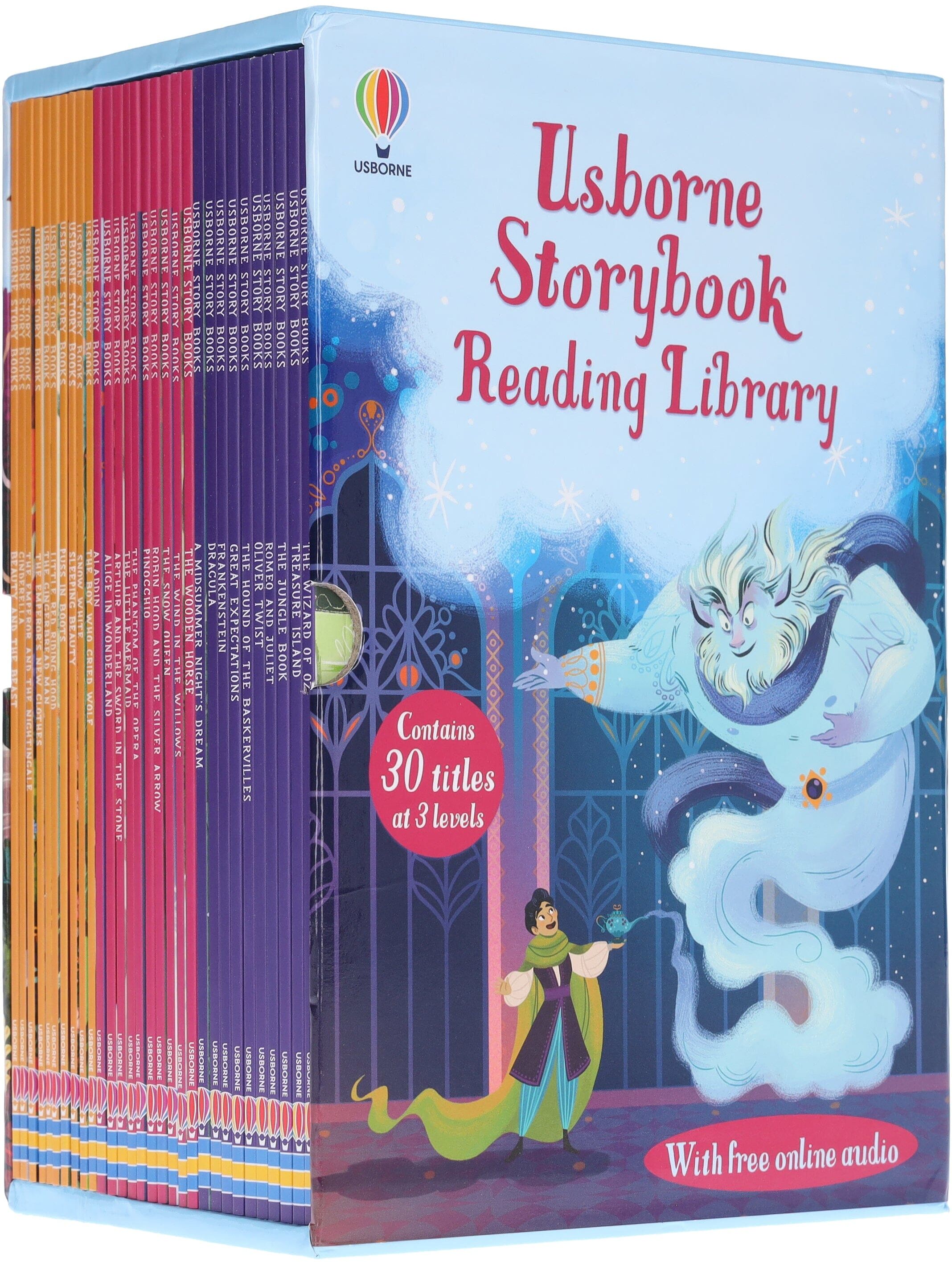
Usborne Storybook Reading Library 30 Books Collection Box Set With Free Online Audio - Ages 5-7 - Paperback Usborne Publishing LtdTitles in This Set: Level 1 Beginner Reader: 1. Beauty and the Beast 2. Cinderella 3. The Emperor And The Nightingale 4. The Emperor's New Clothes 5. The Gingerbread Man 6. Little Red Riding Hood 7. Puss In Boots 8. Sleeping Beauty 9. Snow White 10. The Boy Who Cried Wolf Level 2 Developing Reader: 1. Aladdin 2. Alice in Wonderland 3. Arthur and the Sword in the Stone 4. The Little Mermaid 5. The Phantom of the Opera 6. Pinocchio 7. Robin Hood and the Silver Arrow 8. The Snow Queen 9. The Wind in the Willows 10. The Wooden Horse Level 3 Confident Reader: 1. A Midsummer Night's Dream 2. Dracula 3. Frankenstein 4. Great Expectations 5. The Hound of the Baskervilles 6. Oliver Twist 7. Romeo and Juliet 8. The Jungle Book 9. Treasure Island 10. The Wizard of Oz Description: Usborne Storybook Reading Library 30 Books Collection Boxed Set (Level 1 Beginner Reader, Level 2 Developing Reader & Level 3 Confident Reader) With Free Online Audio.29,99 £*Shipping: 2,99 £Secure redirect to the provider
-
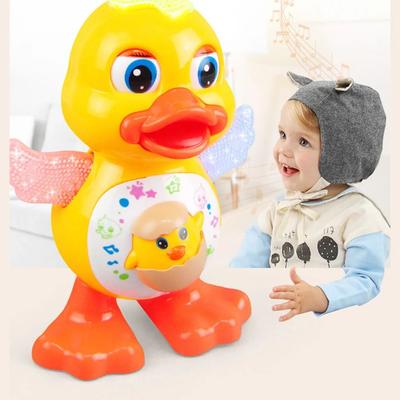
Playful Picks Interactive Dancing Duck Toy With Music & Lights, Screen Free Fun For Toddlers Interactive Dancing Duck Toy With Music & Lights, Screen Free Fun For ToddlersThe Interactive Dancing Duck Toy is a musical, lightup motion toy that keeps toddlers active, focused, and screenfree, supporting motor skills and sensory learning.How It Supports Early DevelopmentWith flashing lights, cheerful music, and wobbly...34,97 $*Shipping: 0,00 $Secure redirect to the provider
-
What are linguistic aspects?
Linguistic aspects refer to the different components of language that are studied in linguistics. These aspects include phonetics (the study of speech sounds), phonology (the study of sound patterns), morphology (the study of word structure), syntax (the study of sentence structure), semantics (the study of meaning), and pragmatics (the study of language use in context). Understanding these linguistic aspects helps us analyze and interpret language in a systematic way. **
-
What is linguistic redundancy?
Linguistic redundancy refers to the use of unnecessary or repetitive words, phrases, or information in communication. It can often be seen as a form of over-explaining or providing more information than is needed to convey a message. While some level of redundancy can help clarify communication and ensure understanding, excessive redundancy can lead to inefficiency and confusion in language. Overall, linguistic redundancy can be both a helpful tool for emphasizing key points and a hindrance to clear and concise communication. **
-
What are linguistic features?
Linguistic features are the characteristics of language that help to distinguish one language from another or one dialect from another. These features can include phonological features (such as the sounds used in a language), morphological features (such as word formation and inflection), syntactic features (such as word order and sentence structure), and semantic features (such as the meaning of words and how they are used in context). Linguistic features are essential for understanding and analyzing language and are used by linguists to study and compare different languages and dialects. **
-
What are linguistic devices?
Linguistic devices are techniques and structures used in language to convey meaning, create emphasis, and evoke certain emotions or responses from the audience. These devices can include figurative language such as metaphors and similes, as well as rhetorical devices like repetition and parallelism. They are used by writers and speakers to enhance the impact and effectiveness of their communication, and can be found in various forms of literature, poetry, speeches, and everyday conversation. **
* All prices are inclusive of VAT and, if applicable, plus shipping costs. The offer information is based on the details provided by the respective shop and is updated through automated processes. Real-time updates do not occur, so deviations can occur in individual cases. ** Note: Parts of this content were created by AI.